







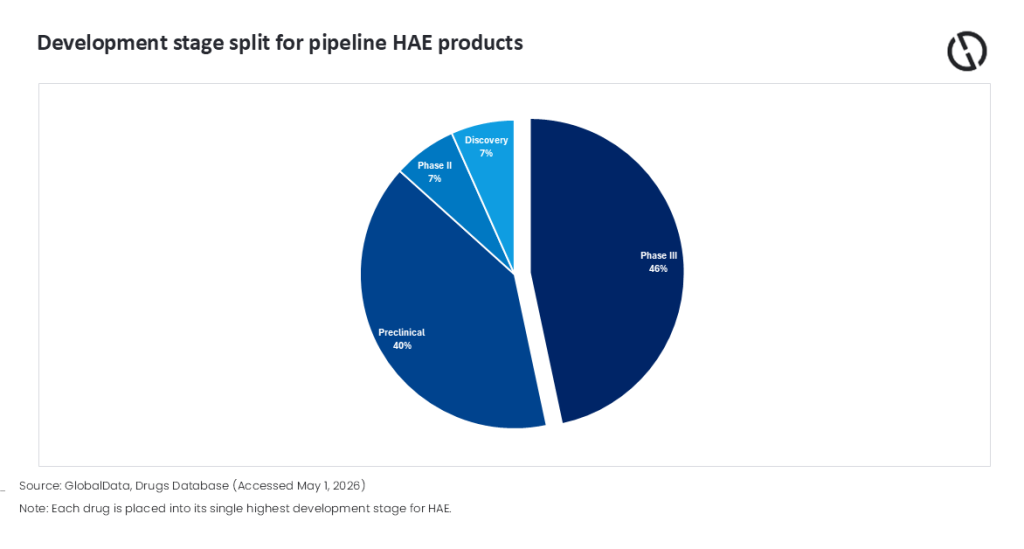
The hereditary angioedema (HAE) pharmaceutical landscape is evolving at an unprecedented speed. Following a surge of approvals in recent years, the market is now facing a late-stage development bottleneck, as 46% of pipeline drugs are currently in Phase III. This concentration of late-stage assets suggests a wave of approvals in the coming years, potentially creating a crowded rare disease market. Emerging technologies such as clustered regularly interspaced short palindromic repeats (CRISPR) and small interfering RNA (siRNA) platforms may provide meaningful differentiation in an otherwise competitive landscape, according to GlobalData, a leading intelligence and productivity platform.
HAE is a potentially life-threatening inherited disease characterized by recurrent and severe episodes of swelling in various parts of the body, including hands, feet, genitals, stomach, and face or throat, which can prove fatal. This is a rare condition, which is estimated to affect approximately 7,000 people in the US (Busse & Christiansen, 2020).
According to GlobalData’s Drugs Database, after four years of inactivity, a record of three FDA innovator HAE approvals in 2025 reshaped the treatment landscape, leading to a total of 11 marketed treatments in the US. Currently, there are 15 innovator drugs in the global pipeline for HAE with seven of these in Phase III, accounting for 46% of the pipeline.
Jasper Morley, Pharma Analyst at GlobalData, comments: “The unusually high proportion of late-stage assets suggests that numerous products are approaching commercialization, pushing the HAE landscape into a new stage of intensified competition.”
Plasma kallikrein is the most common pipeline target, with three Phase III drugs acting through this pathway. This mirrors the current marketed landscape, where plasma kallikrein inhibition is the established leader in HAE treatments. The continued utilization of plasma kallikrein suggests incremental innovation within this landscape. However, several late-stage candidates aim to differentiate themselves through novel technologies.
Intellia Therapeutics’ ionvoguran ziclumeran is a CRISPR-based therapy. Unlike other conventional prophylactic treatments, which require chronic administration, ionvoguran ziclumeran is a potentially curative option delivered as a one-time treatment. This would be the second ever CRISPR drug approval and, if successful, could redefine the HAE landscape. Similarly, ADARx Pharma’s onvuzorisran sodium is an RNAi oligonucleotide therapy targeting plasma kallikrein. By leveraging a differentiated siRNA platform, this therapy offers a competitive edge over other prophylactic treatments by reducing the treatment burden through semi-annual dosing intervals.
Morley concludes: “After years of sparse regulatory activity, HAE has become one of the most active rare disease markets. This unusually high proportion of Phase III assets suggests that approval clustering is likely over the next few years. This wave of innovation may improve patient outcomes but also create conditions for a crowded and competitive market. Therapies demonstrating clear differentiation may be best positioned for long-term success relative to competitors.”